Isometric Web Elements: Enhancing Design Projects with 3D Visuals
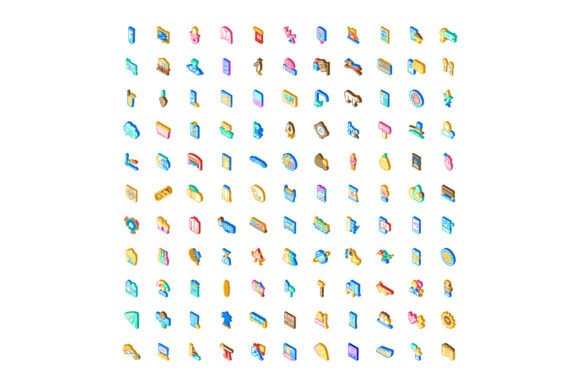
Designers across industries are increasingly turning to Collection of Isometric Web Elements to elevate their digital projects. These three-dimensional visuals offer a fresh, modern approach to web and app design, helping creators communicate complex ideas with clarity and style. Whether you're building a UI kit, developing a mobile app, or crafting a website, isometric elements can streamline your workflow and enhance the visual appeal of your interface.
Unlike flat design, which can sometimes feel static or overly minimal, isometric illustrations introduce depth and dimension without overwhelming the user. This makes them ideal for presenting processes, data, or abstract concepts in a way that's both engaging and easy to understand. The Collection of Isometric Web Elements provides a diverse set of pre-designed components that can be customized and combined to suit a wide range of digital applications.
How Isometric Elements Improve User Experience
One of the primary benefits of using isometric design is its ability to improve user comprehension. Visual storytelling becomes more intuitive when abstract ideas are represented through dimensional graphics. For instance, an onboarding screen in a mobile app can use isometric icons to guide users through setup steps more effectively than text alone.
For web developers and UI designers, integrating isometric visuals from the Collection of Isometric Web Elements can reduce the time spent creating custom illustrations. Instead of designing from scratch, you can select, adapt, and layer pre-made components to build visually cohesive interfaces. This not only speeds up development but also ensures consistency across your design system.
Supporting Creativity Without Sacrificing Efficiency
Creatives often face the challenge of balancing originality with efficiency. The Collection of Isometric Web Elements supports both by offering a flexible foundation for unique designs. These elements can be recolored, resized, and layered to match your brand's aesthetic, giving you the freedom to innovate while still working within a structured framework.
Consider a marketing team designing a landing page for a new SaaS product. Instead of commissioning custom illustrations, they can use isometric elements to visually represent features like cloud storage, collaboration, or analytics. This approach saves time and budget while still delivering a polished, professional look.
Real-World Applications for a Diverse Audience
The versatility of isometric design makes it valuable across multiple fields. Here are a few examples of how different professionals can benefit:
- Freelance designers can expand their portfolio by incorporating high-quality isometric visuals into client projects without extended turnaround times.
- Startup founders can use these elements to prototype app interfaces quickly, allowing them to test ideas and pitch to investors with more polished visuals.
- Educators and content creators can enhance online courses or blog posts with engaging visuals that simplify complex topics.
- Small business owners can update their website or promotional materials with modern, professional graphics without hiring a full-time designer.
These real-world applications demonstrate how the Collection of Isometric Web Elements supports both individual creators and teams working under tight deadlines.
Choosing the Right Set for Your Project
Not all isometric element collections are created equal. When selecting a set, consider the following factors to ensure it aligns with your design goals:
- Scalability: Vector-based elements are ideal for digital design since they maintain quality at any size.
- Variety: Look for a collection that offers a broad range of concepts—such as technology, logistics, finance, and health—to support different use cases.
- Customization: Ensure the elements allow for easy color and style adjustments to match your brand identity.
- Compatibility: Check if the collection integrates smoothly with design tools like Figma, Sketch, or Adobe Illustrator.
The Collection of Isometric Web Elements stands out for offering a well-organized, scalable, and easily customizable set of 3D visuals that support a wide array of digital design needs.
When to Consider Alternatives
While isometric design is highly versatile, it may not always be the best fit for every project. For example:
- If your brand relies heavily on minimalist or flat design, adding isometric visuals might create visual inconsistency.
- In highly technical or data-driven interfaces, overly stylized graphics could distract from core functionality.
- For projects requiring photorealistic imagery, isometric illustrations may not provide the desired level of detail.
In such cases, it's worth exploring other design approaches or combining isometric elements with simpler visuals to maintain balance and clarity.
Maximizing the Value of Your Design Toolkit
Integrating the Collection of Isometric Web Elements into your design toolkit can significantly enhance your creative output. To get the most out of it:
- Organize your assets: Keep your isometric elements categorized by theme or function for quick access during design sessions.
- Build reusable components: Create design system components using common element combinations to speed up future projects.
- Experiment with layouts: Use isometric visuals to break up content-heavy pages and guide user attention through visual hierarchy.
- Collaborate with your team: Share the collection with developers and content creators to ensure consistent visual language across platforms.
These practices help you leverage the full potential of isometric design while maintaining efficiency and consistency in your digital projects.
Final Thoughts on Isometric Design in Modern UI
The Collection of Isometric Web Elements is more than just a design trend—it's a practical tool that supports better communication, faster development, and more engaging user experiences. Whether you're a seasoned designer or someone just starting out, incorporating isometric visuals into your work can help you present ideas more clearly and build interfaces that stand out in a crowded digital landscape.
As design continues to evolve, the ability to convey complex information in a visually appealing way becomes increasingly important. With the right tools, like a well-curated set of isometric elements, you can meet that challenge confidently and creatively.