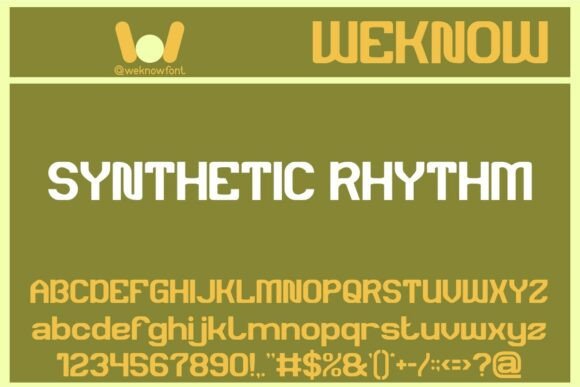
Synthetic Rhythm Font: A Modern Blend of Rhythm and Design
What Is Synthetic Rhythm?
Synthetic Rhythm is a contemporary sans-serif display font that merges the pulsating energy of techno beats with futuristic design aesthetics. It combines retro-digital influences with sci-fi elements, creating a visual rhythm that appeals to designers seeking a balance between groove and innovation. This font stands out due to its unique ability to convey both movement and structure, making it a versatile option for a wide array of creative applications.
Why Consider Synthetic Rhythm?
Designers and creators often look for typefaces that not only communicate a message but also enhance the visual experience. Synthetic Rhythm offers a compelling mix of style and functionality. Its rhythmic structure and futuristic flair make it particularly appealing for projects that aim to evoke a sense of motion, modernity, or digital culture.
Whether you're designing a logo, crafting a headline, or developing a brand identity, this font can elevate the aesthetic while maintaining readability and impact. It’s especially effective in industries such as music, gaming, and digital content creation, where visual rhythm plays a crucial role in audience engagement.
Key Benefits of Synthetic Rhythm
- Versatility: Adaptable across various media, including print, digital, and apparel design.
- Visual Impact: Its rhythmic structure and futuristic look make it ideal for attention-grabbing headlines and logos.
- Creative Flexibility: Works well in both minimalist and complex layouts without losing its character.
- Genre-Specific Appeal: Particularly effective in music-related content, sci-fi branding, and tech-forward visuals.
Considerations and Tradeoffs
While Synthetic Rhythm offers a bold and expressive design, it's important to consider its suitability for specific applications. As a display font, it excels in large-format uses such as posters, headers, and branding elements. However, it may not be the best choice for long-form text or small-sized body copy where clarity and readability are paramount.
Designers should also be mindful of the overall visual hierarchy. Overuse or improper pairing can lead to a cluttered or overwhelming design. It's best used as a highlight or accent font rather than a primary text choice.
When Synthetic Rhythm Shines
This font is particularly effective in the following scenarios:
- Music Industry Design: Perfect for album covers, event posters, and music magazines that want to reflect the energy of electronic or techno genres.
- Gaming and Sci-Fi Media: Enhances branding and promotional materials for games, movies, and graphic novels with futuristic themes.
- Digital Content Creation: Ideal for YouTube thumbnails, Instagram stories, and other digital media where visual rhythm plays a key role in attracting attention.
- Apparel and Merchandise: Adds a modern, stylish edge to t-shirts, posters, and branded merchandise.
When to Explore Alternatives
If your project requires a font that supports long-form readability or a more traditional aesthetic, you may want to consider alternatives. For example:
- Editorial Design: For newspapers, blogs, or reports, a more neutral sans-serif or serif font may be more appropriate.
- Corporate Branding: In formal business contexts, minimalist and professional fonts often convey trust and reliability better than stylized display fonts.
- Accessibility Needs: If your audience includes individuals with visual impairments, ensure that the font's design doesn’t compromise legibility.
Practical Insights for Decision-Making
When evaluating whether Synthetic Rhythm aligns with your project, consider the following factors:
- Project Tone: Does your design aim to reflect energy, futurism, or digital culture? If yes, this font could be a strong match.
- Usage Context: Will it be used primarily for headlines, logos, or decorative elements? If so, it's well-suited for the task.
- Target Audience: Is your audience drawn to modern, edgy, or tech-inspired aesthetics? If so, this font may resonate well.
- Pairing Potential: Consider how it works with other fonts in your design. It pairs well with clean, minimalist typefaces that allow it to stand out without overpowering the layout.
Conclusion: Does Synthetic Rhythm Fit Your Needs?
Synthetic Rhythm is a distinctive font that bridges the gap between digital rhythm and avant-garde design. It offers a compelling visual language for designers looking to inject energy and modernity into their work. However, its effectiveness depends on how well it aligns with your project's tone, medium, and audience expectations.
If your goal is to create designs that reflect movement, innovation, or a connection to digital culture, Synthetic Rhythm is worth exploring. On the other hand, if your needs lean toward subtlety, readability, or formality, alternative fonts may better serve your purpose.
In the end, the best font choice is one that supports both your creative vision and your audience’s experience. Take the time to test Synthetic Rhythm in context, and evaluate how it contributes to your overall design before finalizing your selection.